
Designing a Better Way for Makers to Build Computer-Using Agents

Designing a Better Way for Makers to Build Computer-Using Agents

TL;DR

I redesigned the experience for 'makers' building Computer-Using Agents so they could trust what they were creating.

I redesigned the experience for 'makers' building Computer-Using Agents so they could trust what they were creating.

Problem

Problem

hard to trust

hard to trust

10

10

10

10

rapid design sprints

rapid design sprints

Using AI

0

0

0

0

cross functional critiques

cross functional critiques

Process

Process

clear & confident

clear & confident

Impact

Impact

I tested

I tested

0+

0+

0+

0+

preview concepts and aligned with PM,

preview concepts and aligned with PM,

Research, and Engineering so makers could understand and publish agents with confidence.

Research, and Engineering so makers could understand and publish agents with confidence.

Problem at hand

But.. what are CUAs and why did building them feel hard for makers?

But.. what are CUAs and why did building them feel hard for makers?

Computer-Using Agents are powerful because they can interact with real interfaces… clicking, typing, and navigating just like a person. But that power also makes behavior harder to predict, especially for makers who aren’t automation experts.

When I joined the project, makers often had to infer what their agent would do from configuration alone. Testing felt risky, outcomes weren’t always obvious, and publishing required a leap of faith.

My Role
From composing an agent, to previewing and testing its behavior, to deciding when it was safe to publish… I did it all.

From composing an agent, to previewing and testing its behavior, to deciding when it was safe to publish… I did it all.

Working in ambiguity

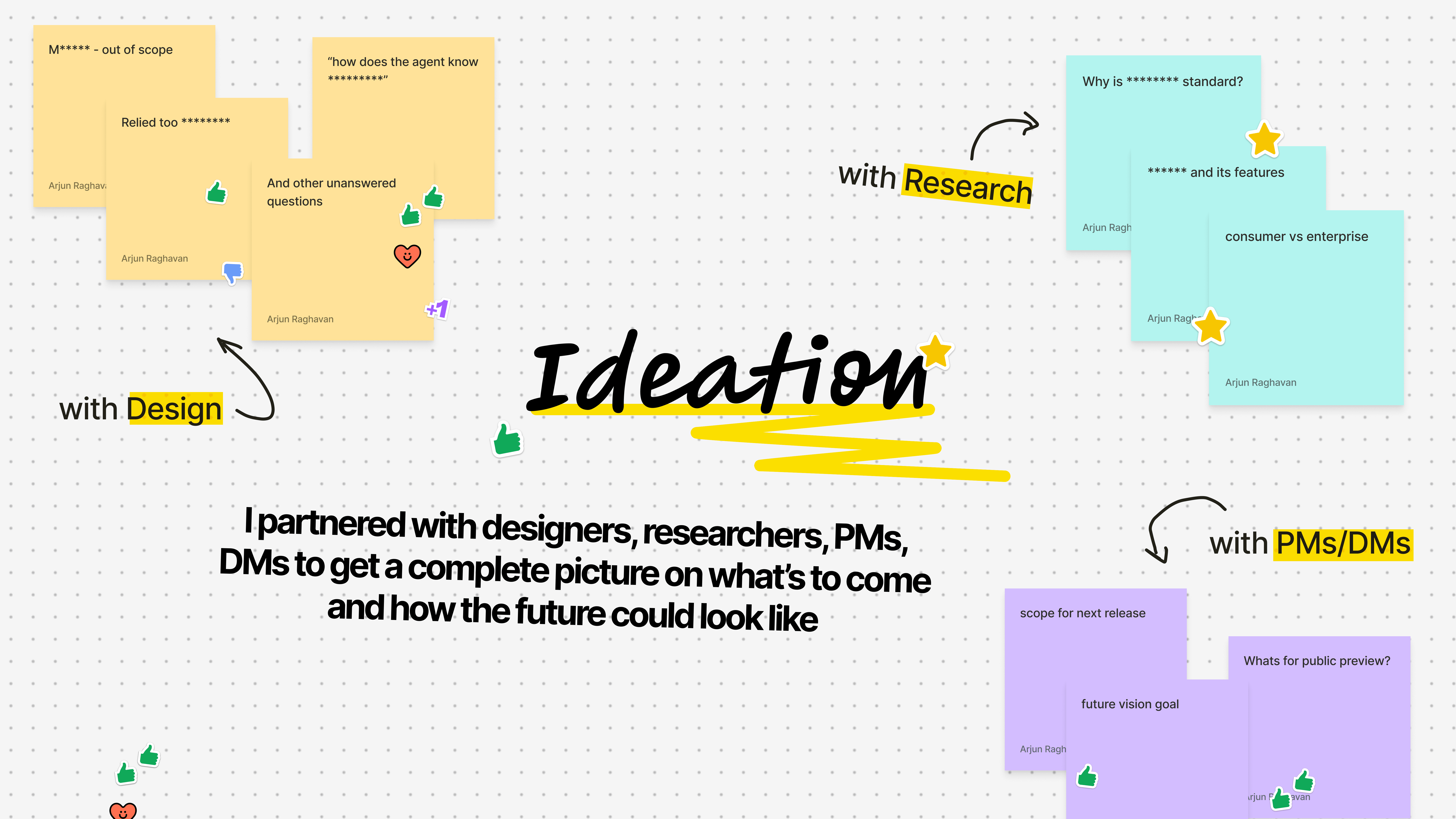
Because this work lived in an early and evolving AI space, there often wasn’t a single “right” solution to design toward. So, my focus was on helping the team reason through uncertainty…

Because this work lived in an early and evolving AI space, there often wasn’t a single “right” solution to design toward. So, my focus was on helping the team reason through uncertainty…

Designing for now & what comes next

CUAs are still an emerging capability, and part of the challenge was distinguishing between what makers needed today vs what might only be possible as the technology matured.

CUAs are still an emerging capability, and part of the challenge was distinguishing between what makers needed today vs what might only be possible as the technology matured.

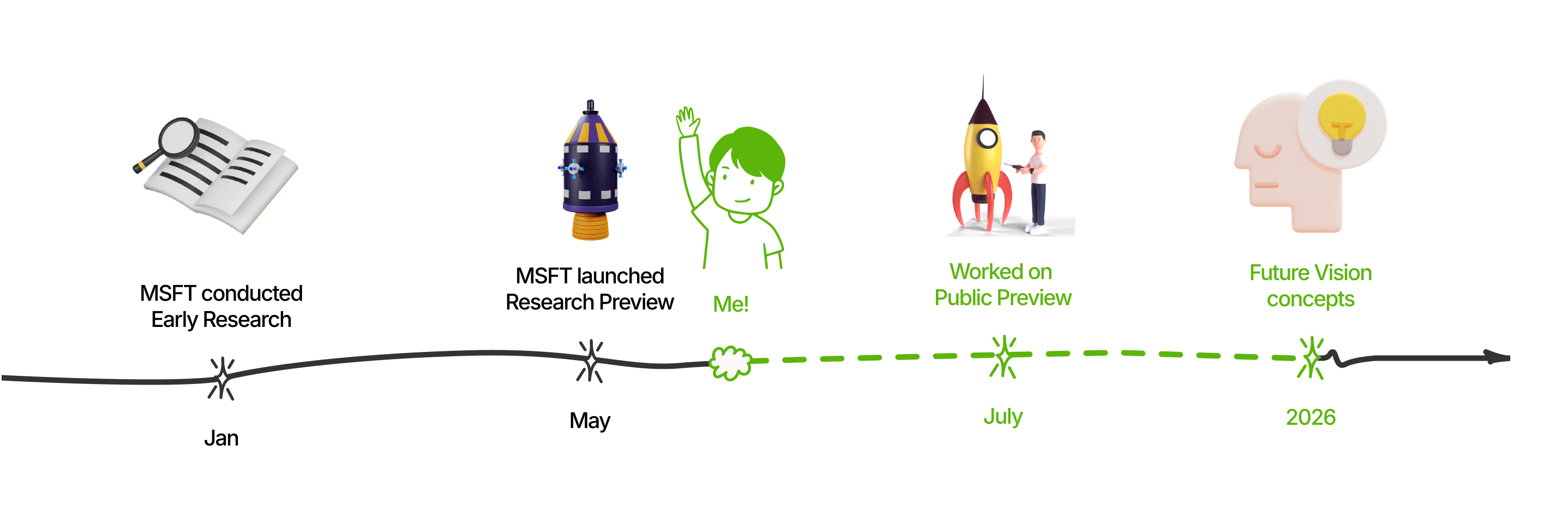
I worked closely with partners to frame ideas across different timelines from near-term improvements that could be delivered for public preview in July, to longer-term concepts that shaped how the experience might evolve over the next year or two.

What this work changed

While specific outcomes are confidential, the work helped shift conversations from...

While specific outcomes are confidential, the work helped shift conversations from...

"Can we really trust this?"

"Can we really trust this?"

"How do we reason about this?"

"How do we reason about this?"

What this taught me about designing for AI

Designing in emerging AI spaces requires comfort with uncertainty. It’s less about shipping perfect solutions and more about helping people build the right mental models as the technology takes shape.

Designing in emerging AI spaces requires comfort with uncertainty. It’s less about shipping perfect solutions and more about helping people build the right mental models as the technology takes shape.

It was an amazing experience and this project told me that clarity, understanding, and systems thinking are essential when designing tools people need to trust… especially when behavior isn’t always predictable.

It was an amazing experience and this project told me that clarity, understanding, and systems thinking are essential when designing tools people need to trust… especially when behavior isn’t always predictable.

Joe

Arjun brought great energy, curiosity, and fresh perspectives that helped us think differently about the user experience. Thank you for all the work you put into CUA — from diving deep into market analysis and experimenting with different tools, to reimagining a more enhanced and intuitive experience for our users. His ideas sparked valuable conversations. I’m also very impressed by his presentation skills — I’ve learned a few things from him there too. I’d be thrilled to work with him again.

tap to like

Joe

PM

Matthew

Senior UX

Mohit

John

Senior Researchers

Tyler

Design Lead
April

Mentor

Joe

Arjun brought great energy, curiosity, and fresh perspectives that helped us think differently about the user experience. Thank you for all the work you put into CUA — from diving deep into market analysis and experimenting with different tools, to reimagining a more enhanced and intuitive experience for our users. His ideas sparked valuable conversations. I’m also very impressed by his presentation skills — I’ve learned a few things from him there too. I’d be thrilled to work with him again.

tap to like

Joe

PM

Matthew

Senior UX

Mohit

John

Senior Researchers

Tyler

Design Lead

April

Mentor

Thats how I approached this problem.

This is one example of how I make complex things make sense. But, here’s another project where I worked through a different kind of complexity…

This is one example of how I make complex things make sense. But, here’s another project where I worked through a different kind of complexity…

Arjun

Check this out!